




Mercy Medical Center is a fully-accredited 445
licensed-bed regional hospital located in eastern Iowa. After surviving
flooding in 2008, vice president and CIO Jeff Cash had to figure out how his
organization was going to survive a move to CPOE and electronic documentation
with his Medtech Magic system. Cash wound up turning to PatientKeeper as a way
to enhance Meditech’s front-end user interface while keeping his core system
intact. Recently, HCI Editor-in-Chief Anthony Guerra had a chance to talk with
Cash about these and other issues.
GUERRA:
Let’s talk about
your strategy towards inpatient ambulatory integration. Everybody wants to tie
up the practices they own and make sure they’re integrated, but certainly
there’s a lot more nuances and subtleties to integrating with the independent
physicians.
CASH:
There certainly are
some political nuances, and the technical challenges are usually just the host
of systems that they would be connecting with. So yes, I agree with that.
GUERRA:
At a high level,
what is your philosophy around that? Later we’ll get into the specifics of your
arrangement with PatientKeeper.
CASH:
Let me start by
telling you what we’re doing with our own clinics and how that extends out to
the community. We’re a Meditech shop, and we were previous LSS users. LSS
offered us a nice host of integration tools that were built-in, but we wanted
to get those back and move away from LSS. The reason that we wanted to do that
is it was so tied to the hospital system that we were trying to move at
different speeds between the hospitals and the clinics because we’re on what’s
called the Magic platform with Meditech.
So
when we gave up the ability to use LSS for our ambulatory record, we wanted to
do the same thing with the new EMR that we put into the offices, which is from
Sage. It’s their Intergy product, and the good thing for us is that Sage is
used pretty widely throughout our community. So we thought if we could make
this work with our own offices, it would extend nicely out to the rest of the
community.
The
two integrations that extend themselves out to the community very nicely are
processing the lab orders to clinical interfaces and eventually additional
orders, such as radiology, and being able to send reports back to the offices.
And
then the second thing is to be able to handle an intake for these clinical
content documents. The flow of clinical content documents is a one-way feed at
this point, but our goal is to bring them in from the community, store them in
a repository – in our case it’s going to be PatientKeeper as the repository –
and then use them in two ways.
The
first way is to bring in acute care information – vitals, allergies, meds, those
kind of things that you need in an emergency department setting or in an
admissions setting – and make them
available to our ED doctors and to our hospitalists. Automatically, we’d like
to be able to make these CCDs flow over into the system and then make those
CCDs show up as an attached part of the medical record, once you’ve established
a treatment relationship with the facility. We wouldn’t be able to use the
system as a traditional health information exchange (in the sense that some
people are building it) because we would only display them if there was a treatment
relationship. That really helps us a lot
on the privacy side of the business, knowing that if your data comes over to
the hospital, it’ll only come up on your physician’s request, and it’ll only
show up upon your request for treatment within the hospital.
We
know we can do that with Sage. We’ve done some early adopter trials with them. Today,
we’re able to manually send one over and have it show up in our PatientKeeper
system and provide the appropriate security for that. What they’re building
into their product right now is the ability to automatically create those based
on events inside the electronic medical record. As soon as they have that in
place, we’ll be able to put it into a production environment and have it
automatically show up over here at the hospital.
The
reason that’s important is we know that an urgent care provider who would login
to your PatientKeeper or medical record and look for information for you to be
treated is probably not going to take the time and go out and search for a
bunch of CCDs in the community, that’s not their nature. So if that CCD is
pre-populated and available, as soon as the registration happens, which
triggers the medical relationship with us, it’ll be there as soon as they login.
It’s more likely to be used because it’s based on the physician’s workflow,
which is why we’re doing it that way. There is a “usability quotient”
associated with some of this.
We
have a community of physicians that is helping us put this together. There are
three practices. There’s the hospital, there’s our clinic group (which is 21
clinics here in the community, about 90 providers), and then the next group
that’s been engaged in this is our specialty group; it’s called Physicians’
Clinic of Iowa. They have a little over 60 providers and they’re using the same
Sage EMR that we’re using. So it makes it a very easy migration for them to add
the same functionality and contribute their CCDs to the hospital.
The
other reason that’s important – and the reason PatientKeeper is important – is that
we have a competitive hospital about 10 blocks away, and when we engaged
PatientKeeper to be our physician portal in front of Meditech, we worked with
them (and with some physician nudging along the way), and they ended up
adopting PatientKeeper to sit in front of a different HIS system. So we now
have these two PatientKeeper integration platforms in both hospitals. So if we
build something and it works for the community offices here at Mercy, the same
process would work over at St. Luke’s, our competitive hospital; they just need
to turn on the same bit of application functionality. So that really was our
starting point behind this.
We’ve
got a variety of other locations that also use the Sage EMR here in the
community, so we knew that was an easy one to go after. As the other two
community offices have the ability to auto-create and transmit a CCD to us,
we’ll be able to accept those as well. We’ve had a number of offices that are
interested in doing exactly that. We just need to build the mechanism for them
similar to what we’ve done for Sage. That’s our CCD story.
The
second piece of that CCD story, which is a little bit different than providing urgent
care, is that we’d like to bring those CCDs in. We don’t actually have all the
politics worked out on this one yet, but I think we’re pretty close. We’d like to bring the CCDs into the
clinical repository that we have here and perhaps bring in a slightly more robust
CCD, and then make that available only to the providers that submitted those
CCDs. They could potentially see that information in a locked repository that
they would have sole access to. This would allow them to also use that as some
form of downtime solution if they lost the EMR in their office for some reason.
So
the advantage to that is we’re already pulling CCDs over, only displaying them
once a treatment relationship is established, but if we create that mechanism
to bring their CCDs over anyway, we’d like to be able to offer that value-added
service. Such a service would be valuable if they have only a single EMR
server, for example, and perhaps it’s down for some reason, or as in the case
of Cedar Rapids when we were flooded last year, a lot of our offices had some
real challenges. This would allow them to avoid paying for all the backup
mechanisms they would otherwise need.
Our
second phase of this, I believe, will eventually be a community-based health
information exchange, but there’s a lot of work being done at the state level
right now to provide one. So as opposed to us trying to develop a solution via
local community-based health information exchange, I think what we were
planning on was developing it to meet our needs. The goal is that when you show
up at the hospital, we can take care of you appropriately with that one-way
push into us, and then as the state rolls out its own health information
exchange, we would simply attach to that for routing between primary care
offices, for example.
GUERRA:
Have you done much under
the Stark exemptions?
CASH:
We have not. These
are independent Sage purchases by the office, and we’ve not used the Stark law
as a vehicle yet to provide an office-based EMR to anyone here in the community.
Most of our offices are already EMR-enabled on their own. We’re coming down to
the last, very small offices that are left, and there are three MSO (management
services organization) providers already in the community that seem to be doing
a good job taking care of most of those smaller offices.
So
that’s really been the community strategy today. We do offer MSO services to
some of the facilities, but it’s a cost-based model as opposed to an offset
model to start.
GUERRA:
Let’s talk about Meditech.
How long have you been on Magic?
CASH:
We’ve had Meditech’s
Magic system for about 20 years now. Our Meditech relationship goes back pretty
far. When you say that, you’d think we have a 20-year old system in place, and
that’s not really the case because it’s very new. We’re actually on the newest
versions of their software, and we’ve done quite a little bit with the software
itself.
GUERRA:
What version of
Magic are you using?
CASH:
We’re on a version
called, I believe, 5.63 which is about the newest version they have on the
market for Magic. So we’ve done a lot with it. For example, we recently implemented
the EMR and the bedside medication verification products and we’ve got it
heavily interfaced with clinical monitors in the hospital. In our critical care
units, it’s interfaced with glucometers, with i-STATs, with all the types of
medical devices you would expect.
The challenges we really had with Meditech
is that, in the beginning, the physician interface wasn’t going as well as we
would have liked because, in the Magic environment, it’s not as robust as you
might find with some of the new physician portals. So although it worked okay, it
really wasn’t drawing physicians in. That was the first part of a three-way
strategy we had for putting PatientKeeper in – to give the physicians a
different way to get access to Meditech that was more user-friendly.
The
second part of the strategy was to use it as an integration platform, so that anything
they needed from the hospital, we would either give it to them in the
PatientKeeper view or we would let them find it through PatientKeeper (which
would reach out to whatever system housed the data). So they would only need one password, one user ID, one starting place,
and they have access to virtually everything they needed.
The
third leg of that strategy was that because we have 400 providers in our
community, who generally work in both hospitals very fluidly, we wanted to have
something that both hospitals could use. So if you’re trained in one location,
it works in the other location. It really has changed conversations with our
physicians. They’ll ask us about upgrades and enhancements now, but we don’t
spend our medical exec meetings talking about how difficult it is for them to
use our technology. We now talk about the things you would think we should in
those meetings, which would be quality issues. So that’s the CCD PatientKeeper
piece.
GUERRA:
Is Meditech
Client/Server a separate product?
CASH:
They actually have
two more versions beyond what we have. I don’t know the exact numbers. You
might have to get this from Meditech, but I think about 60 percent of their
customer base is still on the same platform we are – Magic. A growing number
have converted, or almost all of their new installations are on Client/Server
and they have recently leapfrogged that again to a kind of third-generation of
their platform that they’re using – a product named Focus. You can go from
Magic and upgrade to either Client/Server or to Focus. Many like us are waiting
because Focus is really only installed in a few, big hospitals. Right now, it’s
in an early release process. Although it’s production-ready, a lot of us are waiting
a couple of years to see the evolution of it and how well it works before we commit
ourselves to migrating. I suspect in the next few years, we’ll be making the
commitment of migrating our Magic system to Focus.
GUERRA:
Is Focus the same
thing as 6.0?
CASH:
It is. Honestly, I
don’t know if there’s a Client/Server 6.0 or not. I think Client/Server’s ends
at a 5.something and then Focus 6.0 is the next version. I believe that they’re
selling it to a lot of new customers coming in on a smaller scale. The harder part is really to convert us
bigger legacy customers, with everything that we’ve done to the Magic platform,
into that new environment.
GUERRA:
It sounds like
PatientKeeper is a way to improve the physician interaction with your core
clinical system. Did you debate between going to Meditech 6.0 or Client/Server
because you wanted a more attractive physician interfaced on the one hand, or staying
on Magic and layering on PatientKeeper, on the other?
CASH:
We were very much
embedded in that debate, Anthony. About three years ago, when we decided to
take all our nursing documentation online, we put a whole plan together and pulled
together a group of physician advisors to give us some guidance. We heard that
they didn’t really want to use the system as it existed, just because they said
it was less friendly than it needed to be. So we were also concerned at that
point about our nurses using it.
What
we took from that was, “Boy, if I’m having a hard time with it, my nurses are
probably going to have a hard time with it. I’d rather have them spend time
doing patient care than worrying about a health information system that’s less
than intuitive.”
So
it was really challenging for us. At that time, we had to add some additional
graphical user interfaces for our nurses on Meditech. So we used a suite of
products from Iatrics. We gave them a flow sheet and a visual status board, and
some things like that.
Since
then, we have migrated nursing back off of most of those because Meditech has
really enhanced their nursing product quite a bit on the Magic platform. So
they’re very comfortable now using that. And what we said was, “We’re not ready
to take the leap into Client/Server with Meditech, because that’s probably at
least a two or three year project because of all the dependencies.” We didn’t
want to wait that long to get our clinicals online.
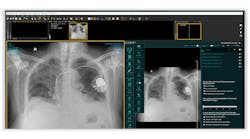
So PatientKeeper turned out to be
the easy way for us to give the physicians what they wanted, keep the system we
had in place, and insulate them from it. So to them, they no longer know we
really have Meditech. We could move to another brand of HIS. We could do an
upgrade. And they really won’t know the difference because PatientKeeper is a separate repository of clinical information.
We put six or seven years of data into it, pretty much everything they need,
and it runs independently from Meditech.
So
if Meditech is down for an upgrade – which we do once or twice a year – we’ll
be insulated from it because PatientKeeper sits between us and the doctors.
As
a matter of fact, there was one point in time where our hospital was flooded
about a year ago and we did take Meditech down for a short period, for just a
few hours, out of concern that we would lose power distribution through the
whole facility because we took a lot of water in the bottom two floors of the
hospital. We didn’t want to take a chance on crashing Meditech; so we’d already
moved all the patients out of the hospital and we purposely shut it down. We
had PatientKeeper load up our patient information out of their facility in
Boston, and that was the portal the physicians could use for all our
transferred patients, which was an interesting way to continue to use that
database.
PatientKeeper
is a separate clinical database of the same information that lives in Meditech
and it works independently. So everything went to PatientKeeper, and we really
don’t have to talk to Meditech and vice-versa.
Part II
|