




Resource Guide | Advertise | White Papers | Events | eNewsletter

Healthcare Informatics HomeHealthcare Informatics AdministrativeHealthcare Informatics ClinicalHealthcare Informatics FinancialHealthcare Informatics ImagingHealthcare Informatics Policy ArticlesHealthcare Informatics Wireless ArticlesHealthcare Informatics Research SeriesHealthcare Informatics WebinarsFor ReadersContact UsHealthcare Informatics Blogs
Cover Story
Subscribe
2010 Calendar
Back Issues


News
 More News...

  RSS - News


Issue Date: September 2009


The Heart of PACS
While most CIOs feel secure taking on the challenge of traditional radiology-focused PACS, cardiology PACS is another story
by Mark Hagland

Scott grier
Scott Grier


Even before they can think about the integration of radiology and cardiology PACS, simply getting first-generation cardiology PACS implemented is turning out to be a major challenge for CIOs.

Why cardiology PACS development should be difficult is illustrated by the simple fact that there are more devices involved, more diverse types of images and data, and a far more complex and interactive patient care environment in cardiology than in radiology. It's no wonder that cardiology PACS remains a first-generation phenomenon, even in the most “advanced” of hospital organizations.

Todd rothenhaus
Todd Rothenhaus

Indeed, when asked what the leading edge is in cardiology PACS development right now, Scott Grier says, “I don't know that there is yet a leading edge, at the moment.” In fact, says Grier, principal in Sarasota, Fla.-based Preferred Healthcare Consulting, “I think that cardiology today is where radiology was in the mid-1990s, in terms of digitization. We spent years porting certain elements of radiology work from analog to digital. Now, we're at the same level in cardiology.” And while there isn't enough pressure from the American College of Cardiology or other organizations to bring all of the disparate formats into one console, some vendors are exploring that, he says. “In hospitals, we have all these formats, but we can't launch from a single workstation. So it raises the costs to be able to view any particular study,” which is why some organizations are moving ahead despite the challenges.

Kimberly moreau
Kimberly Moreau
 

One example of an organization that is quietly making progress is Caritas Christi Health Care System, a six-hospital organization based in Boston, which serves a swath of eastern Massachusetts. Senior Vice President and CIO Todd Rothenhaus, M.D., says his organization began rolling out cardiology PACS using Alpharetta, Ga.-based McKesson Corporation, in early 2008. “We're about halfway done,” he says. “We already had PACS live in the radiology space, and it was one of those systems that was working extremely well for us, so we decided to extend our digital imaging to the cardiovascular space.”

Rothenhaus says Caritas has digitized data coming out of echocardiology modalities, and digital imaging and reporting live. In addition, he says, some nuclear medicine images are coming over as well. Digitization of hemodynamic monitoring is moving forward, and he says ECG digitization will be next. “We want to get all this done by the end of our next fiscal year, in October 2010.”

A complex environment

A more modest step into the cardiology PACS sphere is being taken by the folks at 118-bed Carroll Hospital Center, a standalone community hospital located in Westminster, a small city in a rural region of central Maryland. Kimberly Moreau, assistant vice president and CIO at Carroll, says she and her colleagues have gone live with digitization of hemodynamic monitoring, including the core monitoring element, continuous gathering of vitals information from the hemodynamic procedure, and recording of data. (Carroll's cardiology PACS partner is also McKesson).

And, though the implementation of this first piece has not proven particularly difficult, Moreau says, “How all the pieces fit together from a technology perspective, so that the patient monitors and the cardiac monitors talk to each other, and so forth, is surprisingly complex.”

Joe marion
Joe Marion


In terms of the complexity of cardiology as it compares to radiology, Rothenhaus says that people probably thought radiology was a complex environment, too, but that it's just more mature now. “The issue really,” he says, “is that there's just so much more hands-on care involved in the cardiology environment. And though it's true that interventional radiologists see patients, cardiology has a much more patient-centric environment overall.”

Further, says Rothenhaus, he and his colleagues have been implementing cardiology PACS across their IDN, and are looking to build a truly enterprise-wide imaging management system (encompassing radiology as well, of course). As a result, he says, “The biggest issue that we've really had is that the implementation has been way more complicated than we had initially given credit for.”

None of this surprises Joseph Marion, principal with Healthcare Integration, a consulting firm based in Waukesha, Wis. As Marion points out, “Radiology is a serial review process. I look at an image, I report on what I see in that image, and create a report out of it. In cardiology, the interactions are more complex, and the images tend to be dynamic, as opposed to the static images of radiology.”

What's more, he says, “A lot of cardiology studies, particularly the cardiac cath studies, are stat cases. Compare that with radiology, where I create an order, start the study, stop the study, and so on. In cardiology, there isn't time for that; they just put in the minimal of information and go. So in cardiology, there's often more urgency in terms of the workflow aspect.”

Henri “Rik” Primo, who works out of the Image and Knowledge Management division at the Malvern, Pa.-based Siemens Healthcare, says the cardiology environment is definitely more intense.

“Radiology PACS is all about storing and displaying images, and the radiologist is dictating reports that go into a RIS. In cardiology, though, pieces of a report can actually be completed while a patient is being treated. For example, in the case of hemodynamic measurement systems, part of the task is to measure and record wave forms and ECGs; and these can be automatically populating a cardiology report while the cardiologist and technicians are still with the patient. So it's a very different environment.”

Paul Webster, Jr., lead technologist in the cardiology department at the 250-bed Children's Hospital of Michigan (which is a part of the Detroit Medical Center), says such advantages far outweigh the practical challenges of cardiology PACS implementation.

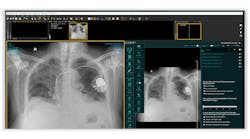
At Children's Hospital, a cardiologist can view evidence-based reporting on customizable templates alongside embedded images while in the background viewing autopopulated hemodynamics. With another click, the cardiologist can view previous cath procedures from the same patient, and one click later can send a report to referring physicians and the billing department.

Such capabilities have improved reporting accuracy and workflow at Children's. What's key, Webster says, is that, “CIOs should be thinking about the potential for integration of tools and systems, and the ability to import images from any modality or vendor,” as he and his colleagues have at Children's. (Children's is using the Syngo Dynamics solution from Siemens Healthcare.)

The path forward for cardiology PACS remains a bit unclear, most agree. For one thing, says Joe Marion, “Until recently, there hasn't been the urgency within cardiology to tie all the elements together. What's more, often, cardiologic services have themselves been fragmented. I'm seeing that at one large delivery system back East,” he says, “where in some cases, nuclear studies for cardiology are done as cardiology and, in some, done as radiology, in different facilities within that system.”

Healthcare Informatics 2009 September;26(9):34-36

Topic: Imaging

Articles & Archives:
  • Money on the Line
  • Bellwether or Anomaly?
  • Community-wide Views
  • When Every Second Counts
  • The Key to Image Management
  • Image Explosion
  • Parsing the PACS Market
  • One-on-One with Christus Health SVP & CIO George Conklin
  • PACS Administrators No More?
  • The Future of Imaging, Part II
News:
  • Report: Integration and Functionality Drive RIS Decisions
  • DR Systems Lands $2.3 M in Contracts
  • Sonosite to Acquire Visualsonics
  • St. Joseph’s Gets PACS
  • Texas Orthopedics Practice Gets PACS
  • Yale-New Haven Deploys Image Sharing
  • Merge to Acquire AMICAS
  • PACS iPad App is Announced
  • Amicas Signs Merger Agreement
  • Premier Inks CR Contract with Konica Minolta

Comments:
Thursday, September 17, 2009 2:25:09 PM by carestreamhealth
Technology has evolved in the past couple years to enable PACS vendors to consolidate the disparate devices within cardiology. This has enabled both cardiologists and physicians in remote settings to access diagnostic quality images and data.

Vendors like Carestream Health are reducing the total cost of ownership for customers by offering a Cardiology PACS solution with a "Radiology-like" pricing model. This uses a concurrent licensing model on a web-based server to enable review and report of cath, echo, nuclear cardiology and ECG procedures from any networked PC. Cardiology PACS can also link various other results within cardiology including Holter, exercise stress and hemodynamic reports. Additionally, uniform reporting tools across all cardiology procedures are available with a structured reporting interface. Facilities around the world are beginning to implement solutions like these with compelling results.

- Kiran Krishnamurthy | Global Product Manager, Carestream Health
Saturday, May 08, 2010 1:50:35 AM by Martin
PACS Systems' needs to be viewed as a strategic and critical information system therefore, the PACS System needs to managed within the Information Services by an Imaging Team that report up to the organization's CIO. The PACS System is a corporate asset and not just a radiology imaging management system.

Enterprise Imaging is composed of Radiology, Invasive Cardiology, Non-Invasive Cardiology, and Radiation Oncology.

The Imaging Team should have the following leadership structure: Senior Director of Enterprise Imaging, Director of Imaging Operations, Manager of the Imaging Team, and a Supervisor of the Imaging Team.

At the clinical or operational level, the PACS System day to day problems or issues should be directed by a group of individuals called Medical Imaging System Specialists (MEDISS). The MEDISS folks should have experience in both clinical radiology and information services. The MEDISS personnel reside at the clinical sites and work closely with the clinical folks to assist them with the various issues with the RIS, the PACS technologies, and the reading workstations. The MEDISS folks report up to the Imaging Team Supervisor and the Imaging Team Manager.

In large integrated healthcare systems, this is the only way to get your arms around the various technologies, clinical applications, clinical workflow processes, information interfaces, MS patching, system upgrades, maintenance releases, unscheduled downtimes, system back-ups, and disaster recovery requirements.

Martin Daly

Leave your comment
 
You must sign in to post
 
Username 
Password 
No Community Member account? Sign up here.
CAPTCHA Validation
Retype the code from the picture
CAPTCHA Code Image
Speak the code Change the code


Quick Contacts


© 2010, Vendome Group, LLC. All rights reserved. Privacy Policy.