





Mercer County, N.J.-based Capital Health –
a two-hospital, 589-bed regional health network, including an ambulatory
facility – recently completed the implementation of an EMR from Boston-based Keane.
Comprised of Mercer and Fuld hospitals in Trenton, N.J. and the Capital Health
in Hamilton outpatient facility, the organization is expanding, with construction
underway for a new hospital in Hopewell Township, N.J. as well as an expansion
of services at its Fuld hospital, both scheduled to be completed by 2011. Add
to all that the goal of qualifying for HITECH stimulus funds and it’s no wonder
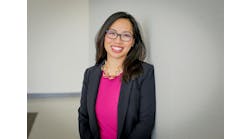
CIO Gene Grochala has his hands full. Recently, HCI Editor-in-Chief caught up
Grochala to talk about how he’s managing all these challenges.
GUERRA: When
did you go live on Keane?
GROCHALA: It
was April Fools’ Day 2009, a few months ago, though we signed the contract in
2007.
GUERRA: Take
me back to the 2006 timeframe and tell me how the conversation started.
GROCHALA: In
2006, we were running HBOC Series.
GUERRA: And
they were bought by McKesson, right?
GROCHALA: That’s
right. We had it running in two different hospitals, and we had that primarily
as our orders results documentation system, but we had a series of other
systems that were independent – pharmacy, OR, ER. We went to Beacon Partners
out of Massachusetts and we asked them to help us develop a three-year IT plan.
We got together our physicians, nurses, financial department and we went
offsite. We did this over a couple of months and laid out what a typical day in
the life of somebody at the hospital would be to figure out what kind
of information we needed to bring together.
With that, we created a very nice document, and it
really showed we wanted a single-source vendor. The people we had brought together
wanted to have a comprehensive view of information in the form of an online
electronic medical record, and they really wanted a big system that
communicated patient data easily and transparently. They didn’t say it had to
be without interfaces or integration, but they wanted it to be transparent for
themselves, and the technical problems were on us.
With that, we took the document to our board and asked
for some capital funding to go out and search for another vendor, another
product which was more state-of-the-art. We looked at a lot of vendors and did site
visits, primarily it was clinicians that went. We did have some IT
representation but IT was in the background because we really wanted the end user
to pick the system.
I believe it was our director of nursing
informatics who found the Keane system, while at the same time we were building
a $700 million hospital. So, my director told us to do more with less. That is,
we couldn’t go out and spend $50 million on a clinical information system. We
had to find something that would do the job, but also have some real ROI. It
has to be reasonable, but it also had to deliver.
Coincidently, myself and three other people from
the organization were going for a Patient Safety Fellowship at the American
Hospital Association. So, we were really focused on patient safety at that time.
We were also three years into our first CPOE
system. Again, it was more of a standalone system. It was really for medication
only and we had about 45 percent utilization on CPOE for medication. We’re
still at that figure. So again, we wanted total CPOE, including diagnostic
orders as well as our pharmacy orders.
So, with all this in mind, we brought Keane in and
found it to be it a diamond in the rough. We found it to be a sleeper. We kept
asking, “Why don’t they market this stronger? Why don’t they have a bigger
presence in the marketplace?” I think they are like 12th in the
clinical systems and acute care settings, and they’re just really happy with
what they have and very proud of it. Every time we threw a question
at them or a problem at them, they would bring the system in and show us how
they handle the issues. We were still disbelieving. We then put a criteria list
together, about 100 points of things that we wanted out of a system, a quick
checklist, and they scored – again this was done by the clinicians – 93 out of
100. Pretty good score, better than I did in college. (laughing)
GUERRA: What
was your budget for the project?
GROCHALA: We
were trying to keep it under $5 million for two hospitals as a project budget,
not just what we spent for software.
GUERRA: That
cut a few contenders out right there?
GROCHALA: Yes,
that’s true. We were not going to look at the high-end guys.
GUERRA: Do
you still use some McKesson products?
GROCHALA: Yes.
GUERRA: Tell
me about your software environment now. You said you have some McKesson
products, you’ve got Keane, can you give me the lay of the land?
GROCHALA: Well,
we really wanted to focus on clinical applications, so we left our admissions,
registration, medical records, and billing in place. You have to think of the
patient flow for billing admissions and medical records, the DRG coding, we didn’t want to touch that. We
really focused on orders and results, clinical documentation, vitals, EMRs, pharmacy
CPOE, electronic medication administration that works right out of the
box with any kind of Palm or Blackberry, and we wanted the single
comprehensive view of patient data. So, while we taught a physician or a nurse how
to use it in a hospital, the
physician could use it in his office, the physician could use it in his house. We
wanted to make sure that once they were taught, they would know how to use
everything.
In the past, we had done a lot of our own Web
development. When they came out of the hospital, they saw one view of the patient data, when they went home, it was a Web-enabled
product. We wanted to get away from that and have one product be what they saw
in the hospital as well as what they saw in their house or in their office.
GUERRA: Tell
me more about the software environment.
GROCHALA: We
still have an independent system running in the emergency room.
GUERRA: When
you say ‘independent’ what do you mean?
GROCHALA: The
OR system is Mediware Perioperative, the emergency room system is from
a company called EMA. They’re out of Livingston, N.J., and the product is
called EDIM. Pharmacy is Mediware. CPOE is Mediware. Lab is a big one, OpusLab.
GUERRA: Who
do you have PACS from?
GROCHALA: Radiology
is from a company called Dynamic Imaging. It’s been purchased by GE, and
cardiology PACS is Philips.
GUERRA: And
RIS?
GROCHALA: We
really don’t have an RIS. We’re pretty much satisfied. We satisfy their needs
with in-house programming. (Between the PACS and then the transcription system.)
GUERRA: You
said CPOE is not through Keane?
GROCHALA: No,
not yet; that’s where we’re going.
GUERRA: Just
from the sound of it, you’ve got a pretty complex environment. Would you like
to reduce the number of vendors you work with?
GROCHALA: It
is hard to get there, but that is where we’re going. We actually have
contracted for these other products, like pharmacy CPOE and the EMR, with Keane.
It’s price protected in the contract. We just went live in April. For two
hospitals with a lot of applications, we’ve got over 2,200 people trained and
over 400 physicians trained. Two weeks after we went live, I took a trip to
Tampa, Fla., and my phone wasn’t ringing. It was pretty quiet.
GUERRA: So
it’s gone well.
GROCHALA: Yes.
No one is screaming for us to throw it out or accusing us of getting the wrong
system.
Now we’re trying different hardware at the point
of care, and that’s a real challenge in itself. Nobody ever seems to be happy
with whatever you pick, there’s always an issue.
But going
down the single-source-vendor path, we want to minimize the number of vendors
without jeopardizing patient care, because these niche vendors do their jobs
very well, like the operating room and the lab. It’s really hard for a big vendor
to replicate everything that they do. In a perfect world, we will have
probably 80 percent of our applications on Keane for the comprehensive medical
record. We’ll always have an independent PACS system. I think everybody else in
the world will, too. We’re struggling with the emergency room system now, in
that we have a system and we’re talking to Keane about trying to get the
emergency room over to the Keane product.
Keane has a product development effort going on
right now for CCHIT certification, so we’ll have a personal health record in
there, bar coding electronic medical record, EMR medication administration
record, and all of that kind of stuff. It’s all sitting there. It’s just a matter of us taking it out of price
protection, buying it, then starting the next phase of implementation.
Part II
|